LATEST NEWS

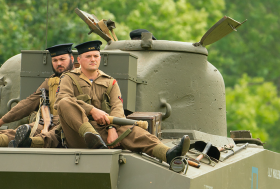
War Horse and Private Peaceful: Writing about World War One
Michael Morpurgo
12/04/2015
Audio from Michael Morpurgo’s talk at Chalke Valley History Festival on Sunday, 29th June.
Award- winning writer Michael Morpurgo talks on writing about the first world war for young people including Private Peaceful, Medal for Leroy and, of course, War Horse. Its huge success as a book, then a play and then a block-busting film, has made its creator into one of the most successful children’s authors of all time.

🎧 THE ENTRY OF THE US TO THE FIRST WORLD WAR: CENTENARY REFLECTIONS
Audio from Chalke Valley History Festival 2018. For the United States, the First World War is ‘the forgotten war’. As yet it has no national memorial in Washington (although there are now plans to put that right). The distinguished military historian Professor Sir Hew Strachan not only addresses why that is the case, he also looks at why the United Kingdom was and remains dismissive of America’s contribution to eventual victory.
Read More
🎧 GALLIPOLI: CAUSES, CONSEQUENCES AND COMMEMORATION
This lecture, recorded 100 years on, seeks to explain the Gallipoli campaign and place it in its wider context. It looks at the latest understanding of the evidence from both sides, particularly from the Ottoman/Turkish perspective. The example of Gallipoli remains compelling both for contemporary military operations and the nations involved, especially Turkey, New Zealand and Australia.
Read More
Those Magnificent Men..
One summer’s afternoon, in 1917, Grahame Donald attempted a new manoeuvre in his Sopwith Camel. He flew the machine up and over, and as he reached the top of his loop, hanging upside down, six thousand feet above the ground, his safety belt snapped – and he fell out. He was not wearing a parachute; they existed but were not issued to British pilots in the belief that their availability would impair fighting spirit.
Read More
Michael Morpurgo talks to us about ‘An Eagle In The Snow: The Man Who Could Have Prevented WW1
Michael Morpurgo talks to us about writing historical novels and what inspired him to tell the amazing story of Henry Tandey, the most decorated soldier in World War One.
Read More
OVER THE TOP: THE STORY OF DOROTHY LAWRENCE
Any historical narrative is shaped by its conclusion, and I knew about the end of Dorothy’s life before I knew anything else about her. In 1925 she was committed to Hanwell Lunatic Asylum, and remained in psychiatric institutions until her death in 1964. What she did at the start of her life however was quite remarkable, and I have wanted to find a way of retelling her story in a way that celebrates the energy and verve of this extraordinary personality.
Read More
WWI Trench build – Part 2
Want to learn how a First World War trench is constructed? We are doing just that, using authentic methods and materials, official period manuals, as well as drawing upon the testimonies of those who built and fought in them, this will be as close a representation of what a First World War trench was like as is possible.
Read More
First World War Trench Build – Part 1
At this year’s festival we are very excited to have created a scale section of a First World War trench. Built by a team of experts and local volunteers, and using authentic methods and materials, official period manuals, as well as drawing upon the testimonies of those who built and fought in them, this will be as close a representation of what a WWI trench was like as is possible.
Read More
David Olusoga Interview
Following the centenary commemorations of WWI, historian and BBC presenter, David Olusoga, talks about why Africa and Asia's contribution has been overlooked, and why that's finally changing.
Read More
Catastrophe: Europe Goes to War, 1914
Audio from Max Hastings' CVHF talk on Saturday 28th June 2014. Journalist, editor and acclaimed author Sir Max Hastings tells the story of how Europe went to war in 1914 precipitating the first of the 20th century’s great tragedies. He challenges the view of some modern historians that British participation was unnecessary and concludes with the christmas truces when the struggle had lapsed into the stalemate which was to last the next four years.
Read More
Warrior: The Amazing Story of a Real War Horse
Audio from John Julius Norwich's talk at the Chalke Valley Festival on Wednesday, 25th June 2014. The famously beautiful Lady Diana cooper’s bracingly perceptive wartime letters to her son are a delight. She and her husband were the perfect ambassadorial couple who knew everyone from hilaire belloc to Nancy Mitford, Evelyn Waugh and Winston Churchill. John Julius Norwich, historian, travel writer and television personality, illuminates the letters from his mother with his customary charm and wit.
Read More
Fighting on the Home Front: The Legacy of Women in World War One
Renowned broadcaster and bestselling author Kate Adie reveals the ways in which women’s lives changed during WWI with fascinating details of their struggle for admission into the world of men. She charts the seismic move towards equal rights that began a century ago and show how women emerged from the shadows of their domestic lives.
Read More
Exclusive interview with Jeremy Paxman – CVHF 2014
Notorious broadcaster and journalist Jeremy Paxman discusses with Xander Drury his recent book 'Great Britain's Great War' as well as sharing his thoughts on his role as the 'Grand Inquisitor' and life after leaving Newsnight.
Read More
Lady Emma Kitchener to open Princess Mary Gift Boxes, untouched for nearly 100 years
You are invited to a special event at the Daily Mail Chalke Valley History Festival, on Saturday 28th June at 4pm, when Lady Emma Kitchener will be opening a sealed packing case which has remained untouched since the start of the First World War.
Read More
Interview with Kate Adie – Chalke Valley History Festival 2014
Veteran war correspondent and reporter Kate Adie talks on Day One at CVHF 2014, discussing with Xander Drury her glittering career in journalism as well as her latest book 'Fighting on the Homefront: The Legacy of Women in World War One'.
Read More
Interview with Kate Adie – Chalke Valley History Festival 2014
Veteran war correspondent and reporter Kate Adie talks on Day One at CVHF 2014, discussing with Xander Drury her glittering career in journalism as well as her latest book 'Fighting on the Homefront: The Legacy of Women in World War One'.
Read More
Dealing With the ‘Blackadder’ View of the First World War: The Need for an Inclusive, Bi-Partisan Centenary
The intervention of Education Secretary Michael Gove on the First World War suggests that the Centenary is becoming a political football. In this personal reflection, historian Gary Sheffield argues that it is not too late to disentangle the Centenary of the First World War from crude partisan politics.
Read More