LATEST NEWS


But that’s another story..
Michelle Magorian
08/04/2014
I would never have guessed that an image in my head of a small, terrified evacuee standing in a graveyard over thirty years ago would lead me to write a short story, which grew into a novel (Goodnight Mister Tom), six more novels and research for new ones bringing me into contact with people who have shared their life experiences and knowledge with me.
 That first image reminded me of the two little boys my mother had told me about when she was a nurse on a children’s ward in a London hospital during the blitz. One crawled under the bed never having slept in one before; the other had been sewn into his underwear for the winter. That gave me his background. As I was jotting these ideas down, my mother suddenly died.
Her funeral took place on a beautiful day in May. When we arrived at the graveyard I noticed a small house through the trees. I discovered it was where the man who took care of the graveyard lived. I decided that my little boy would be billeted there only I set the graveyard in a country village. It was as though my mother had not only given me William but also Mister Tom.
The story of Goodnight Mister Tom is about two people who have both been hurt by life in different ways. It is through living together that they heal one another.
Most of my novels contain people from my previous books or a seed of an idea for a future one. For example, my novel for young adults, A Little Love Song is set in the summer of 1943 and was triggered by an incident in Goodnight Mister Tom.
Tom, William and a boy called Zach stay briefly in a village by the sea and peer through the dusty windows of a second hand bookshop. Because the sun is out they don’t step inside as Tom sees it as the sort of place to visit on a rainy day. I wanted to return to it and find out why it was so neglected and who worked there. That summer of 1943 also led me to a hidden love story set in the First World War.
Back Home evolved from a photograph I had come across while carrying out research for Goodnight Mister Tom. It was of a group of boys and girls on the deck of a ship arriving in England from America in 1945. They were sea evacuees. Their clothes and their hairstyles looked American. Even the manner in which they stood seemed American.
Most of them had been sent away from England in 1940 when the Germans invaded France. When some of the ships carrying them were sunk, it became too dangerous to continue evacuating them. Churchill also believed it was bad for morale to see people fleeing the country. Their parents had no idea that they would not see them again for five years.
As a seven-year-old child I had travelled to Australia with my parents and little brother. My father, who was in the Navy, had been stationed there. Returning home, two and a half years later I had little memory of England. My culture and my accent were Australian. England was a cold foreign country to me.
My mother sent me to Elocution lessons to get rid of my accent. For years I had believed it was for snobbish reasons. It was only much later that I understood why. I suspect she believed that until I had lost it I would not make friends.
Ignored by the other children I was lonely, and I hated England so much that if we had to sing an English song in a singing lesson I would refuse and mime it instead. Luckily the teachers encouraged my acting side and eventually I made friends.
 Knowing the difficulties I had experienced after only two and a half years away from England and accompanied by my parents I wondered how these children coped after five years away from home without their parents.
The photograph continued to haunt me. It was as though the children were saying, ‘ you have to write about one of us. We won’t leave you alone until you do.’
I surrendered and began my research. I met sea-evacuees, listened to them on the telephone and read their letters. This led me to explore American children’s books, American Art, American music, traditional American stencilling and, through two chance encounters in a library in Connecticut and in a canteen in the British Library in London I was able to find out what it was like to be in Junior High in the 1940’s.
Many of these children couldn’t understand why their parents sent them away to boarding schools on their return. They believed that their parents didn’t want them. One woman told me that her first three years back in England was like living in a dark tunnel.
 Back Home tells the story of twelve-year-old Rusty. Like many shocked, disorientated and lonely sea-evacuees she is faced with bombed streets and rationing, has to adjust to living with relatives who seem like strangers including her four year old brother born in her absence and she is also expected to behave like an English girl.
But Back Home isn’t only about her struggles to adjust to war torn Britain, it’s also about the relationship between her and her mother. At first they expect each other to be the same person they had been in 1940. Eventually they realise that they need to get to know one another all over again.
Back Home led me to write Cuckoo In the Nest.
I had been offered work playing three very different roles in three Feydeau Farces. During a rehearsal break the Director mentioned that he had read Back Home.
‘It wasn’t just sea-evacuees who had problems adjusting to living with their families again,’ he told me. ‘Evacuees in this country had problems too.’
He had been billeted with two sisters in Devon for four years and had loved it so much that he had wanted to be a farmer. His father wouldn’t hear of it and on his return from serving in the army overseas he found him a job that he hated. His salvation was his evening work in two Variety theatres.
It made me wonder how a working class boy, post war, could get his foot into the ‘legit’ theatre where plays were performed and I began interviewing actors and stage technicians who had worked in weekly repertory theatre in the forties.
 Cuckoo In the Nest is set in the severe winter of 1947 when England suffered the heaviest snowfall since the 1800’s. Because of the shortage of houses people made homes in abandoned army huts, railway carriages and overcrowded rooms.
The Hollis family are fortunate. They live in a two up two down small terrace house, one of only five left standing in their street.
Dad (John Hollis) sleeps in a narrow makeshift bed in the kitchen. Each member of the family takes turns to sit on it during meals, as there aren’t enough chairs to go round. As well as the Sunday night bath in the zinc tub, the room is also used for cooking, drying clothes and listening to the wireless.
In the front room, twelve-year-old Elsie shares a bed with her seventeen-year-old cousin Joan. Above the kitchen, Mum (Ellen Hollis) sleeps in the double bed with her ex WAAF sister Winifred (Aunty Win). Ellen’s sons Harry and Ralph sleep top and tail in a small bed in a room across the landing where Elsie frequently flees to in the night to escape Joan’s snores, which can be heard in the next county.
Win, who is not a great lover of the male species, is none too happy at the return of her sister’s husband. Bored to death working in a department store she is also finding it difficult to adjust to civvy street.
Ellen, meanwhile, shops, feeds everyone, cleans the house, does the laundry and struggles to keep the peace. Unfortunately, in the midst of the family friction there is a cuckoo in the nest.
Ralph.
During the war Ralph and his brother and sister had been evacuated to Cornwall where they had been separated and taken in by two families. Ralph had been billeted with a vicar and his son. Ellen had missed them so badly that she decided to bring them home. By then Ralph had been offered a place at a grammar school. Realising that this was his chance of receiving a good education she allowed him to remain there.
When Ralph’s father returns home from overseas he is none too pleased to discover that not only is his sixteen-year-old son still at school when he should be out earning a living but that Elsie has also been offered a place at a local grammar school. After several arguments he allows Ralph to remain with the vicar until he’s taken his School cert exam and, because Aunty Win has paid for the uniform, agrees under sufferance to let Elsie take her place at the grammar school.
Ralph returns to his working class nest with a middle-class accent. Within a few months he is sacked from the paper mill where his father had arranged an apprenticeship for him. To make matters worse, Ralph has a secret. He wants to be an actor and work in the local weekly repertory theatre company but even in that world he is a cuckoo in the nest for in the 1940’s the legit theatre was a middle class institution.
As the snow continues to fall bringing trains to a halt, burying vegetables and causing the government to ration electricity, the family dramas escalate and Ralph and his father become ever more entangled in loathing one another. In spite of this, Ralph manages to sneak into the theatre, volunteering to search for props and helping out at the Saturday night striking of the current play’s scenery. One night, on finding a drunken female Assistant Stage Manager unconscious during a performance and thus unable to play the maid, he takes a life changing decision.
As the snow thaws there is widespread flooding and Elsie is nearly drowned, trapped in the rubble of a bombsite.
 The following book, A Spoonful of Jam is her story and takes place in the heat-wave summer of 1947. By now, Aunty Win has taken advantage of the recruitment drive for the Auxiliary Territorial Service (Women’s Army) and joined up removing one less cause of friction.
But Jack Hollis, after years of living with men still finds living with females uncomfortable. Elsie longs for him to pay her some attention and to invite her to accompany him to his allotment, a very male preserve. Instead, he continues to be on the look out for any sign of hoity-toity behaviour from her, convinced she might turn out like Ralph. On the advice of her mother she hides her homework and her borrowed pre-NHS spectacles from his sight.
It is for this reason that she decides not to tell him about the gang in the next street who bully her. What causes her to be more frightened is that she will no longer have her fourteen-year-old brother, Harry to protect her from them, as he will be starting work at the paper mill. To avoid being on the streets she auditions successfully for a role in a Victorian thriller, Pink String and Sealing Wax. It is after working with the company for four weeks, chaperoned by a woman who strides through the streets like a highly cultured Sherman tank that she finds the courage to confront the leader of the gang.
A new image catapulted me into my next book, Just Henry. This time it was an old cinema. So that’s where I’m going next I thought and began my next historical journey which included reading more old newspapers, watching old films, paying a visit to a Cinema Museum in London and being invited to see a wonderful collection of wirelesses by a man who lives in a nearby village.
 My main character in Just Henry is fourteen-year-old Henry Dodge who loves watching films. He goes to the cinema at least three times a week, more, if he can earn extra money at a local grocery shop. But in 1949 when my story begins, it was quite common to go to the cinema three times a week. Few people had television sets. The wireless was the main source of entertainment, if you could afford one.
And these cinemas weren’t like today’s studio cinemas housing 150 people with only one main film and trailers. They were magnificent pieces of architecture with paintings and ornate windows on the walls and soaring ceilings. Some were like cathedrals, others like grand Tudor mansions, breathtaking Greek temples or Art Deco edifices. Outside where there were still bombed buildings and rationing, many people were living in crowded rooms in dreary conditions. Imagine what it must have been like to leave that world, enter a vast red carpeted foyer with gold chandeliers hanging above it and walk up a wide marble staircase. It was like being in a palace. And in fact the cinemas were called Picture Palaces. They housed up to two thousand people and often had an orchestra pit left over from the days of the silent movies. A massive organ called a Wurlitzer would emerge majestically from its depths with a man in evening dress pulling out all the stops (literally) as it rose, and the film programme consisted of two full-length films with trailers, advertisements, newsreels and cartoons. And if you were really clever you could remain quietly in your seat and watch the whole programme all over again.
But Henry knows that soon he won’t be able to see so many films. The summer holidays are nearly over, his last year at school is looming and he is dreading it. The previous year, when the school leaving age had risen to fifteen, the pupils in the brand new Form IV had been so angry at being forced to stay another year that the doddery old teacher in charge had been unable to keep control. This resulted in regular canings by the headmaster and detentions after school. Detentions would mean that Henry would be unable to do odd jobs at the grocery shop and earn money for more cinema tickets.
But when Henry returns to school he is surprised to find a new teacher waiting for Form IV. An ex-navy man fresh from Teacher’s Training College Mr Finch is a man who will brook no nonsense and who is also full of new ideas. Henry is just beginning to believe that his last year is not going to be so bad when his form are put into groups for a history project and asked to carry out research for an end of term presentation about life fifty years back, in 1899. Henry is teamed up with two boys he has ignored all his school life, following his grandmother’s advice that there are some people you mix with and some people you don’t. One boy is the son of a deserter, the other, the son of an unmarried mother. When Henry asks if he can be put with another group Mr Finch refuses his request.
Henry finds a way of avoiding them during the break times by volunteering to help the school caretaker clear out a room which is full of junk. It is to be a dark room so that Mr Finch can teach any interested pupils how to develop films. However, his teacher is not fooled. He confronts Henry, gives him an envelope containing the phone numbers of the two boys’ lodgings and warns him that if he doesn’t make use of them during the half term break he will be prevented from taking part in the presentation.
Henry eventually visits them and is surprised by what he discovers. The two boys help him paint the now empty room using a precious pot of black paint that a woman called Mrs Beaumont has managed to obtain for him. Later, while developing a roll of film in this dark room, Henry makes a shattering discovery and his world begins to resemble one of the thrillers he has seen on the big screen.
My latest book has evolved from A Spoonful of Jam where my main character makes an appearance. It is her story twelve years later in 1959.
Middle-aged Winifred Lindsay, now an ex WRAC Major, is paying for her niece Josie, a working-class tomboy, to attend a finishing style London stage school where she is led to believe she has little acting ability.
Fortunately, being in the right place at the right time, she is cast in an American comedy. Unfortunately, being in the wrong place at the wrong time she is flung into danger and hides with a fellow runaway in the Theatre Royal, Stratford East where she spies on the rehearsals of the revolutionary director Joan Littlewood. This experience leads to more work but unbeknown to her, her life is now under threat and she and her aunt find themselves fighting for their lives in the polluted waters of the Thames.
For those who can remember the Ealing Films or who are film buffs, it has a smattering of the comedy thriller The Ladykillers about it. It comes out in November and is called Impossible!
And what about now? Have I grown tired of delving into the past?
Not quite yet.
In Just Henry we briefly meet the two sons of Mrs Beaumont, the woman who helps Henry gain entrance to the cinema and lends him a camera. I want to write a book about them when they were boys, which is how I came to watch a stunning 1928 silent film Underground with a wonderful new score by Neil Brand. Well, that’s my excuse.
I also have the first scene in my head of a novel about Auntie Win and am collecting DVD’s of more old films. Then there’s that book set in the forties …
So many questions needing so many answers. Lovely, isn’t it?

Michelle Magorian’s first novel Goodnight Mister Tom won awards in the UK, America and Australia and been translated into eleven languages.
It has adapted for the stage, screen and radio. In her CVHF talk on 26th June at 5pm, Michelle will discuss Goodnight Mr Tom and these adaptations so that writers can understand that there are many different ways of writing a story as well as exploring this heart-rending tale of an evacuee during World War II.

Daniel Todman chats to us about what he will be speaking about at CVHF
19.05.21
We are delighted to have Daniel Todman speaking at the festival for the first time this year - here he is explaining what he will be talking about.. His talk is on Thursday 24th June and you can buy tickets.
Read More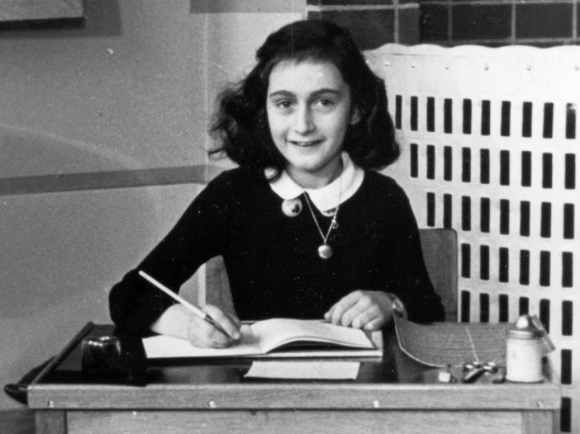
🎧 Anne Frank: Her Life And Light
11.03.20
Audio from Chalke Valley History Festival 2017. German-born Dutch-Jewish teenager, Anne Frank who went into hiding during the Holocaust, is probably the best known diarist of the modern world. In this audio from CVHF 2017, Peter Caddick-Adams talks about her life and legacy.
Read More
🎧 THE SECRET SPITFIRES
04.03.20
Audio from Chalke Valley History Festival 2018. Salisbury and the surrounding area has a proud wartime heritage for thousands of Spitfires were built here in sheds, garages, bus depots and even a hotel. Norman Parker,
Read More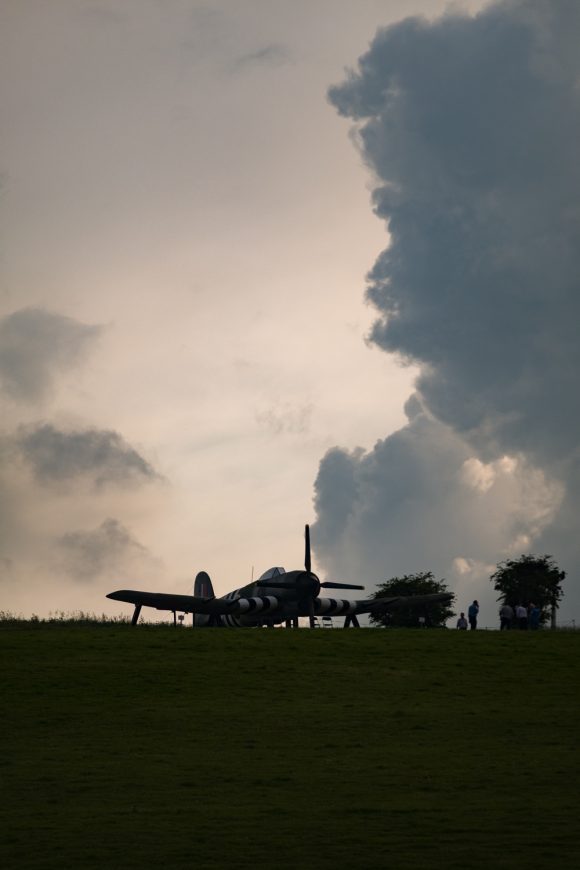
🎧 TYPHOONS AND THE EFFECT OF AIR POWER
24.02.20
Audio from Chalke Valley History Festival 2019. Paul Beaver discusses with John Buckley and Paul Stoddart, the importance of that unsung hero of WWII, the rocket firing Hawker Typhoon.
Read More
🎧 The Red Devils Over Normandy
06.06.19
A recording from Chalke Valley History Festival 2018, from a morning of exclusive talks and demonstrations looking at the story of the British Airborne Forces in #WW2. Here is former Commander of 3 Para in Afghanistan, Stuart Total in conversation with Fred Glover who was in 9th Para on 6th June 1944, tasked with jumping ahead of the main seaborne allied landing, Operation Neptune, to secure the left flank of the invasion and facilitate the seaborne landing.
Read More
🎧 LIVING IN THE SHADOW OF HIMMLER
29.05.19
Recording from Chalke Valley History Festival 2017. Katrin Himmler is a German author and political scientist. Her great-uncle was Heinrich Himmler, head of the SS, and one of the principle architects of the Holocaust. Katrin has confronted her family legacy with a book, Die Brüder Himmler, translated into English as ‘The Himmler Brothers. A German Family History’. She has also edited, together with the historian Michael Wildt, private letters from Himmler that had been only recently discovered in Israel. The Private Heinrich Himmler: Letters of a Mass Murderer was published in the UK last year. Here, in conversation with James Holland, she discusses Himmler, his brothers, and reveals the burden of this Nazi family legacy.
Read More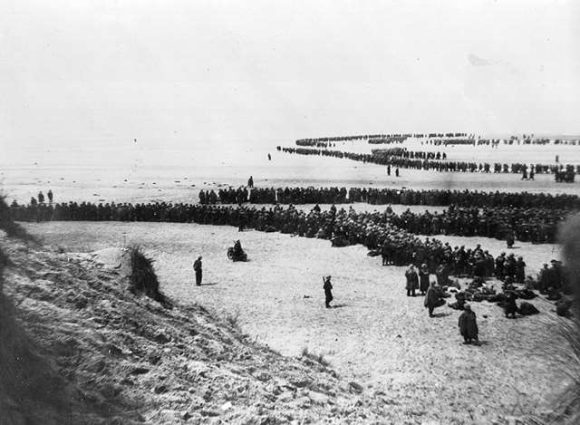
🎧 DUNKIRK
26.05.19
Recording from Chalke Valley History Festival 2017. James Holland looks at one of the most iconic moments in Britain’s history. He examines the background to the German attack on the West in May 1940, challenging many of our deeply held perceptions, and explaining why the British evacuation of Dunkirk was, and remains, such a significant event.
Read More
Gold, Frank-intentions and Murder
24.05.19
Julie Summers is a bestselling author and historian. Her books include: Fearless on Everest: The Quest for Sandy Irvine; The Colonel of Tamarkan, a biography of her grandfather, the man who built the ‘real’ bridge on the River Kwai; Stranger in the House, a social history of servicemen reuniting with their families after the Second World War, and When the Children Came Home, which tells the story of returning evacuees. Her book Jambusters was the inspiration for ITV’s hit drama series Home Fires, which ran for two seasons in 2015–16.
Read More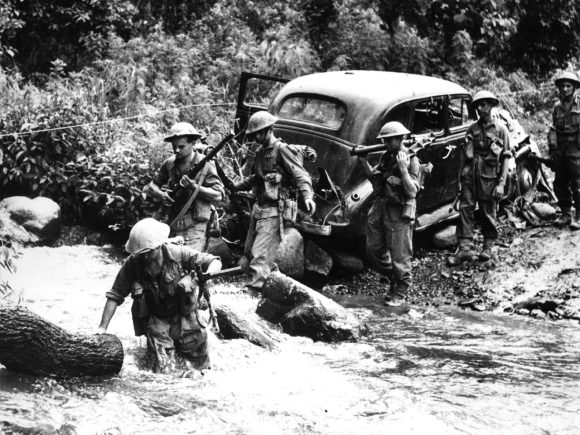
🎧 BRITAIN’S GREATEST BATTLE: IMPHAL AND KOHIMA, 1944
06.03.19
Audio from Chalke Valley History Festival 2018. This epic battle was voted Britain’s Greatest Battle in a poll by the National Army Museum, yet few know or understand why this brutal but decisive engagement was so significant. As James Holland reveals in this talk, it deserves greater recognition not just for the extraordinary leadership of General Bill Slim but also for epic heroism and the dogged determination of all those who fought there.
Read More
🎧 BURMA VETERAN: ARAKAN, KOHIMA AND BURMA
19.01.19
Recorded at Chalke Valley History Festival 2018 Robin Rowland was an officer in Slim’s Fourteenth Army, fighting at the Battle of the Admin Box – the first significant victory against the Japanese – and then at the hell of Kohima and on through the final battles at Meiktila in Burma in 1945. His is an absolutely extraordinary story in which he saw truly terrible things but also witnessed immense courage, tragedy and camaraderie. Here he is in conversation with James Holland.
Read More
🎧 ARNHEM: THE BATTLE FOR THE BRIDGES, 1944
07.01.19
The battle of Arnhem, the great airborne fight for the bridges in 1944, was a courageous strategic gamble that failed. In this talk at CVHF 2018, Britain’s best-selling historian Antony Beevor, using often overlooked sources from Allied and German archives, reconstructs the terrible reality of the fighting and questions whether this plan to end the war could ever have worked, or whether it was always doomed to become the last German victory
Read More
🎧 CHURCHILL: THE ORIGINS OF GREATNESS
30.11.18
Audio from Chalke Valley History Festival 2018. Michael Dobbs, Conservative Peer and author, explores Churchill’s passion, fragility and power, and he is no ordinary investigator of power. He was with Margaret Thatcher when she took her first steps into Downing Street, and with John Major when he was kicked out. But he remains most famous for creating the ultimate in Machiavellian politicians, Francis Urquhart, star of the global phenomenon that is House of Cards.
Read More
🎧 Battle of Britain Spitfire Hero
20.07.18
Audio from Geoff Wellum's talk with James Holland at Chalk Valley History Festival on Saturday, 28th June 2014. Geoff Wellum was a spitfire pilot throughout the Battle of Britain, flying and fighting in some of the fiercest aerial battles of that summer of 1940. More recently, he became the celebrated author of First Light, an astonishing memoir of those days. This was a rare public appearance and a very special event.
Read More
Meeting the Nazi test-pilot Hanna Reitsch
21.06.18
One of the great joys of researching my two books about special agents and pilots in the Second World War has been interviewing veterans and witnesses to that conflict, and others who knew or met those who served in it. As the human coast erodes, as it were, it feels ever more important to capture these stories.
Read More
The secret pigeon service: Heroes who risked all for the birds dropped behind enemy lines who flew home with vital intelligence and left the Nazis flapping
27.05.18
Gordon Corera is a journalist and the author of several books on intelligence and security issues. Since 2004 he has been a Security Correspondent for BBC News, where he covers terrorism, cyber security, the work of intelligence agencies and other national security issues.
Read More
Pilots And Spies, Enablers And Resisters.
25.04.18
Hanna Reitsch and Melitta von Stauffenberg were the only two women to serve as test pilots for the Nazi regime. Truly remarkable women, both were made Honorary Flight Captains and both were awarded the Iron Cross… yet they ended their lives on opposite sides of history.
Read More
VIDEO: Al Murray: Monty
23.03.18
Al Murray may be best known for his comic creation, the Pub Landlord, but he is also a serious and passionate historian and student of World War Two. In this event, filmed at Chalke Valley History Festival 2017, he brings that immense knowledge to bear in defence of Field Marshal Montgomery of Alamein, talks about the life, career, great victories and controversies of Britain’s most famous wartime general.
Read More
Al Murray Highlights: Monty
30.06.17
Highlights from Al Murray's excellent talk on Field Marshal Montegomery of Alamein on Monday 26 June. In this event he brought his immense knowledge to bear in defence of Field Marshal Montgomery of Alamein, discussing the life, career, great victories and controversies of Britain’s most famous wartime general.
Read More
🎧 Schools Festival Audio: Was Hitler a Popular Dictator?
27.06.17
Audio from Chalke Valley History Festival for Schools 2017 with Chris Culpin.
Read More
SAS: ROGUE HEROES
09.05.17
Everyone has image of the SAS: feats of physical endurance involving over-muscled men yomping across the landscape, soldiers in balaclavas abseiling down the side of the Iranian embassy, news stories of secret soldiers carrying out operations in farflung warzones, long on drama, but usually short on detail.
Read More
Highlights of Knight’s Cross Winner, Günter Halm’s talk at CVHF
10.07.16
Günter Halm, a veteran of the Second World War, fought under Rommel in the Deutsches Afrikakorps, won the Knight’s Cross for his part in the First Battle of Alamein in July 1942 and later served in Normandy. In his talk at Chalke Valley History Festival on Saturday, 2nd July, he discussed his wartime memories in what was a truly fascinating morning.
Read More
Deutsches Afrikakorps Knight’s Cross Winner
26.05.16
This extraordinary clip is from the German newsreel 'Die Deutsche Wochenschau' produced by Josef Goebbels' Propaganda Ministry from 1940 until the end of the war. This particular episode clip shows Günter Halm receiving his Knight's Cross from Field Marshal Erwin Rommel for destroying nine British tanks at the First Battle of Alamein in 1942
Read More
CVHF presents The Bomber Crew
09.07.15
We had the privilege of having a complete 7-man crew who made up the different roles on a Lancaster bomber during the Second World War at CVHF this year. George 'Johnnie' Johnson, Jo Lancaster, Frank Tilley, Hal Gardner, John de Hoop, Dave Fellowes, Steve Bethell were in discussion with Paul Beaver.
Read More
D-Day: By Those Who Were There
08.06.15
In the 70th Anniversary year of the D-Day landings in Normandy, we were very fortunate to have two veterans of that campaign talking about their experiences. Fred Glover was in 9 Para, and David Render served with the Sherwood Rangers Yeomanry. Chairing the discussion was Stuart Tootal, former Commander of 3 Para in Afghanistan. This was a rare treat.
Read More
Rationed Fashion & Victory Rolls: Women’s Fashion in the 1940s
06.06.15
This year at CVHF, some hugely significant anniversaries are being marked by the 1940s themed weekend; namely, 75 years since the Battle of Britain and 70 years since the end of World War Two.
Read More
Spare a thought for the Bomber Boys: The unknown air campaign of 1940
28.04.15
Flying obsolescent aircraft, often without clear objectives, target restrictions and little good intelligence, the aircrew of Bomber Command raided Germany and the Low Countries to both support the tactical objectives and begin the fight back.
Read More
The Cockleshell Heroes And The Most Courageous Raid of WW2
10.06.14
This is the story of the remarkable canoe raid on German ships in Bordeaux harbour told by a man who himself served in the Special Boat Squadron. The plan was a suicidally daring one: to drop twelve Commandos at the mouth of the Gironde River and for them to paddle ‘cockleshell’ canoes right into Bordeaux harbour. There they were to sink the enemy ships at anchor. To do this they would have to survive terrifying tidal races, the heavily defended port, and then escape across the Pyrenees. In this compelling talk, Paddy Ashdown reveals some devastating new research that serves only to make the achievements of the ‘Cockleshell Heroes’ all the more remarkable.
Read More
STALINGRAD: Hunting the Reality of War
03.06.14
Recording from Antony Beevor’s CVHF talk on Thursday, 27th June 2013. Antony Beevor’s monumental book, Stalingrad, has been one of the most read and highly praised accounts of the Second World War to have been written in the past twenty-five years. It was also the book that ignited our fascination with the war anew, published, as it was, nearly a decade after the collapse of the Soviet Union and drawing on previously unseen Russian archives
Read More
How wartime communities bought Spitfires
27.03.14
Even in 1940, the Spitfire had celebratory status. Communities and individuals around the British Isles and across the Dominions and Empire were thinking of new ways to collect money and entice their friends to part with their hard-earned savings to buy a Spitfire.
Read More
James Holland interviews Geoffrey Wellum DFC
25.03.14
This is a transcript of an interview with Historian and broadcaster, James Holland, 22 February 2001..
Read More
Flying Legend: World Record Holding Test Pilot & War Ace
25.03.14
Captain Eric ‘Winkle’ Brown is an extraordinary man, whose career stretched from the pre-war days of the biplane to supersonic jets. Captain Brown visited Nazi Germany before the war, flying with General Ernst Udet, flew with the Fleet Air Arm early in the war, had an escort carrier sunk underneath him, then became a pioneering test pilot. He was the first person to land a two-engine Mosquito on an aircraft carrier, flew every single one of the German experimental jets at the end of the war, interrogated Göring, and was a key figure in the post-war Jet Age. No man has ever flown more aircraft types. Charming, amusing, and with a mind as sharp as ever it was, this is a rare opportunity to hear one of Britain’s true flying legends talk about his life and times.
Read More
Churchill: Finest Years, 1940-1945
19.03.14
Max Hastings is one of the foremost chroniclers of the Second World War. Here he talks about Winston Churchill, our greatest war leader. Always forthright, Sir Max looks at the triumphs and the tragedies, the successes and the failures, whether it be the extraordinary rallying cry of 1940 or the impulsiveness that often drove a wedge between him and his generals and even Britain’s allies. He also touches on some of the lesser-known features of Churchill’s war leadership. This is an affectionate and vivid portrait, but also an unsparing one, in which he is willing to challenge some of the myths that surround our view of Britain’s wartime performance.
Read More
Royal Enemy Aliens
03.03.14
When I first heard the eulogy in 2006 for my great-uncle Hanns Alexander, I was amazed. Apparently, he had been served as a Nazi hunter in the British Army at the end of the Second World War. How was this possible? After all, he had grown up as a Jew in Berlin.
Read More
CRUEL CROSSING: Escaping Hitler Across The Pyrenees
01.03.14
Audio from Chalke Valley History Festival, Monday 24th June 2013. They came from all over France and Europe to escape Hitler’s reach. The mountain paths were steep and treacherous...even more so in winter or in the dead of night. Some came through established escape channels, others just took to the road, hiding in barns and attics along the way. Many did not make it. Today, their courage and endurance are celebrated each July by a trek along Le Chemin de Liberté, and the intrepid Edward Stourton hauled on his knapsack to join them. Along the way, he encountered stories of midnight scrambles across rooftops, doomed love affairs and astonishing heroism. In this vivid telling of this little- known aspect of the Second World War, Edward Stourton gave an enthralling talk of adventure, courage and also tragedy.
Read More
The spy who loved
14.02.14
Recording from Claire Mulley's talk "The spy who loved: The Secrets and Lives of Christine Granville, Britain's First Female Special Agent of the Second World War', for CVHF 2013, Saturday 29th June 2013.
Read More
The Great Escape – Guy Walters
11.02.14
In March 1944, some 80 Allied prisoners of war tunnelled out of a maximum security POW camp in Lower Silesia. Immortalised fifty years ago in the film The Great Escape, the breakout from Stalag Luft III has become a vital – and almost mythological – component of our Second World War story. In his talk, Guy will take a fresh look at the escape, and ask a number of penetrating questions. What was the point of the Great Escape? Did it really open, as is often claimed, a new front within the German Reich? How many POWs actually wanted to escape? How well was it organised? Did RAF officers really have a duty to escape? How much help did the Germans supply? What was the character and motivation of Roger Bushell, the squadron leader who led the escape? And finally, was the Great Escape really all that great? Guy’s talk promises to be both thrilling and controversial as he strips away the myth to uncover the reality.
Read More
Exclusive interview with Paddy Ashdown
26.06.13
Following his talk on the 'Cockleshell Heroes', Xander Drury caught up with Paddy Ashdown as he discusses his latest book and shares his thoughts on the 2015 General Election and the changes to the history curriculum.
Read More
Dunkirk Ace – the first Spitfire pilot to win his spurs
06.02.12
Bob Stanford Tuck was every inch the fighter pilot as if ordered up from Central Casting; brave, good-looking, a crack shot and a superb aviator. The London boy who did not excel at school and nearly made the Merchant Navy his career, was to become the first Spitfire Ace in May 1940 in the skies above northern France.
Read More